Epsom Salt for Plant Growth – A Natural Boost for Healthier Plants
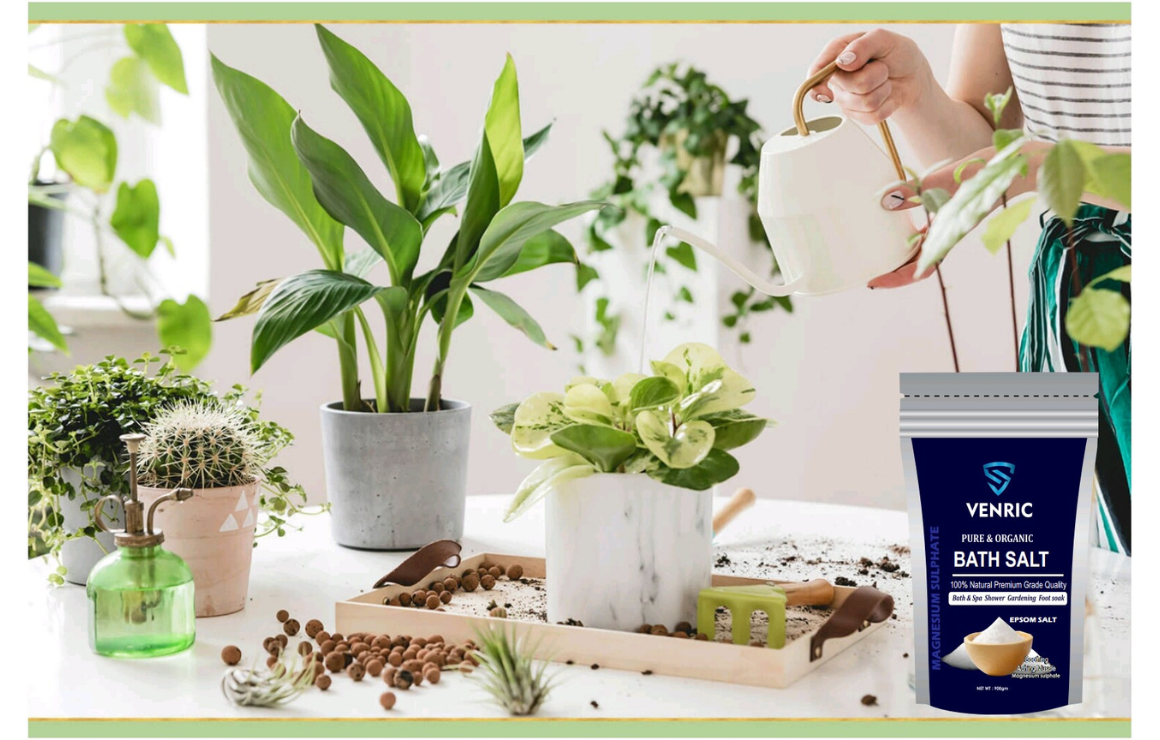
Gardening enthusiasts are always looking for simple, natural ways to improve plant health and growth. One popular home gardening solution that has gained attention over the years is Epsom salt. Known chemically as magnesium sulfate, Epsom salt is widely used in bath soaks — but many gardeners also use it to support plant development.
If you want greener leaves, better flowering, and stronger plant growth, understanding how Epsom salt works for plants can help you make better gardening decisions.
Let’s explore how Epsom salt may benefit your indoor plants, balcony garden, and outdoor landscape.
Why Plants Need Magnesium
Magnesium is an essential nutrient for plants because it:
✔ Supports chlorophyll production
✔ Helps in photosynthesis
✔ Assists nutrient absorption
✔ Promotes greener leaves
✔ Supports healthy flowering
If soil lacks magnesium, plants may show signs such as:
Yellowing leaves (especially between veins)
Weak growth
Poor flowering
Slow development
In such cases, magnesium supplementation may help improve plant appearance.
Benefits of Using Epsom Salt for Plants
1. Promotes Greener Leaves
Magnesium supports chlorophyll production. When plants receive adequate magnesium, leaves may appear greener and healthier.
2. Supports Better Flowering
Some gardeners believe Epsom salt may help enhance flower production when soil is magnesium-deficient.
3. Encourages Stronger Growth
Magnesium helps plants utilize nutrients more efficiently, which may support overall plant development.
4. Improves Nutrient Uptake
Epsom salt may help plants absorb key nutrients like nitrogen and phosphorus more effectively.
5. Helps Certain Plants Thrive
Epsom salt is commonly used for:
Tomato plants
Pepper plants
Rose plants
Indoor foliage plants
Balcony herbs
How to Use Epsom Salt for Plant Growth
1. Soil Application
Mix 1 tablespoon of Epsom salt per liter of water.
Water plants once every 3–4 weeks.
2. Foliar Spray
Dissolve 1 tablespoon in 1 liter of water.
Spray lightly on leaves during early morning or evening.
3. For Potted Plants
Add a small amount (1 teaspoon) to soil and water normally.
4. For Tomatoes & Peppers
Some gardeners add Epsom salt during planting and again during flowering stage.
Important Gardening Tips
Do not overuse. Excess magnesium can disturb soil balance.
Always check soil condition before regular application.
Use as a supplement, not a replacement for balanced fertilizer.
Avoid applying in extremely dry soil without watering.
Moderation is key in gardening.
Indoor Plants & Balcony Garden Use
Epsom salt can be especially useful for:
✔ Snake plants
✔ Money plants
✔ Areca palm
✔ Flowering balcony plants
✔ Herbs like mint & basil
When used occasionally, it may support plant vitality in container gardening where soil nutrients can deplete faster.
Epsom Salt vs Fertilizer
It’s important to understand:
Epsom salt is NOT a complete fertilizer.
It only provides magnesium and sulfur. Plants still need nitrogen, phosphorus, potassium, and other micronutrients for balanced growth.
Think of Epsom salt as a nutrient booster, not a full feeding solution.
Signs Your Plants May Need Magnesium
Look for:
Yellow leaves with green veins
Curling leaves
Poor flower development
Slow plant growth
However, similar symptoms can also indicate other nutrient issues. Proper soil testing is recommended for accurate diagnosis.
Is Epsom Salt Safe for All Plants?
Generally, Epsom salt is considered safe when used in moderation. However:
Avoid overuse
Not all soils are magnesium-deficient
Excess use may lead to nutrient imbalance
Always start with small quantities and observe plant response.
Eco-Friendly Gardening Choice
Using Epsom salt can be part of sustainable gardening practices when used responsibly. It is:
Easy to dissolve
Simple to apply
Affordable
Widely available
Many home gardeners prefer it as a natural plant care supplement.
Frequently Asked Questions
Can I use Epsom salt every week?
No. Once every 3–4 weeks is generally sufficient.
Does it replace fertilizer?
No. It only provides magnesium and sulfur.
Can it be used for indoor plants?
Yes, in diluted form and in moderation.
Is it safe for organic gardening?
It can be used as part of a natural gardening routine.
Final Thoughts
Epsom salt can be a helpful addition to your gardening routine when used properly. It supports magnesium supply, which plays a key role in chlorophyll production and overall plant vitality.
Whether you are caring for indoor plants, balcony herbs, or outdoor flowering plants, using Epsom salt occasionally may help promote healthier-looking growth.
Gardening success comes from balance — and understanding your soil’s needs is the first step toward thriving plants.